The Centro Direzionale is the business district of Naples, a group of office towers east of the historic centre planned by Kenzo Tange and built between the 1980s and the 1990s. It was one of the first clusters of high-rise buildings in Italy, but outside office hours its squares are often empty, and for many people it is a place to cross on the way to work rather than a place to stay.
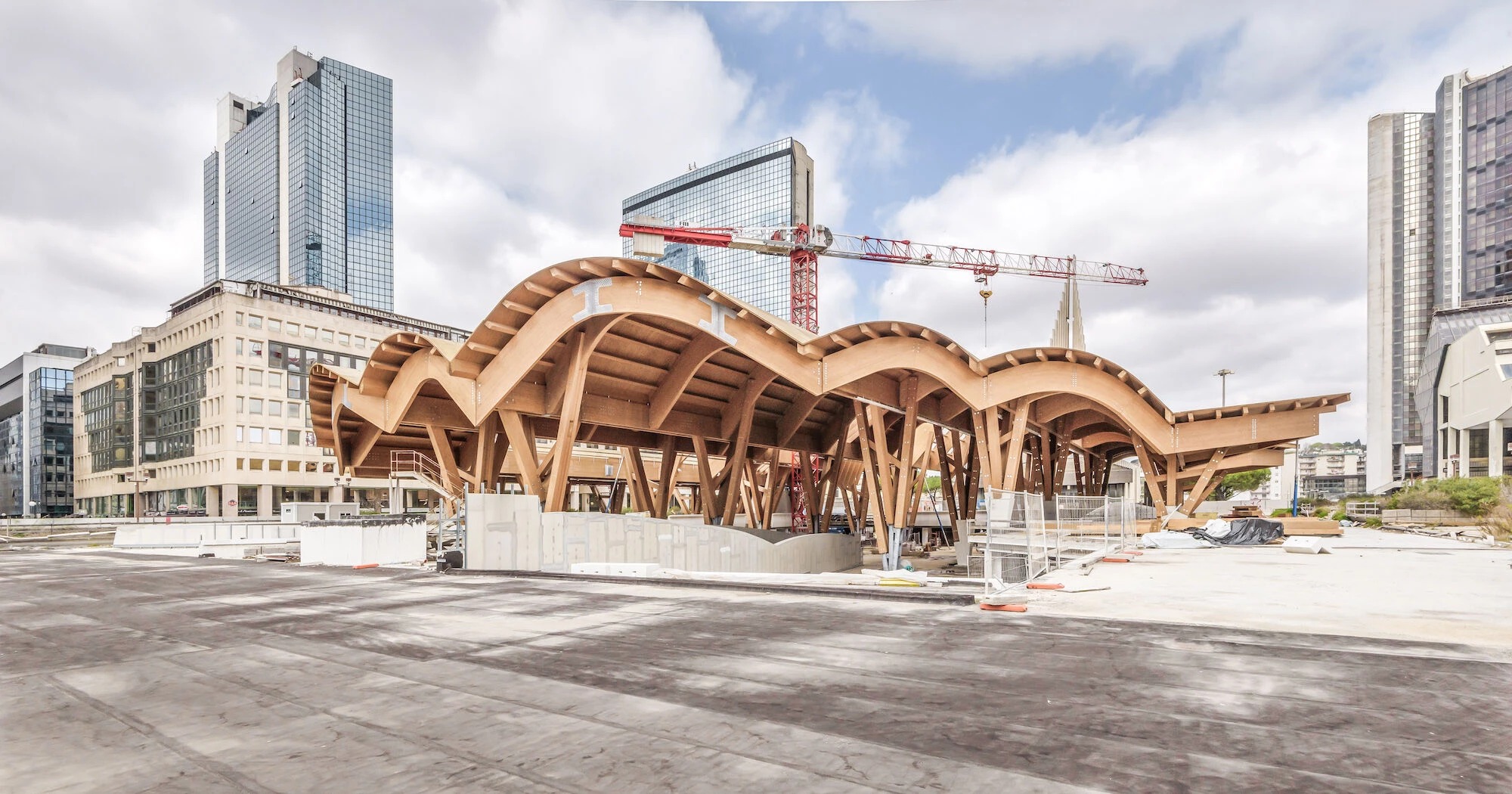
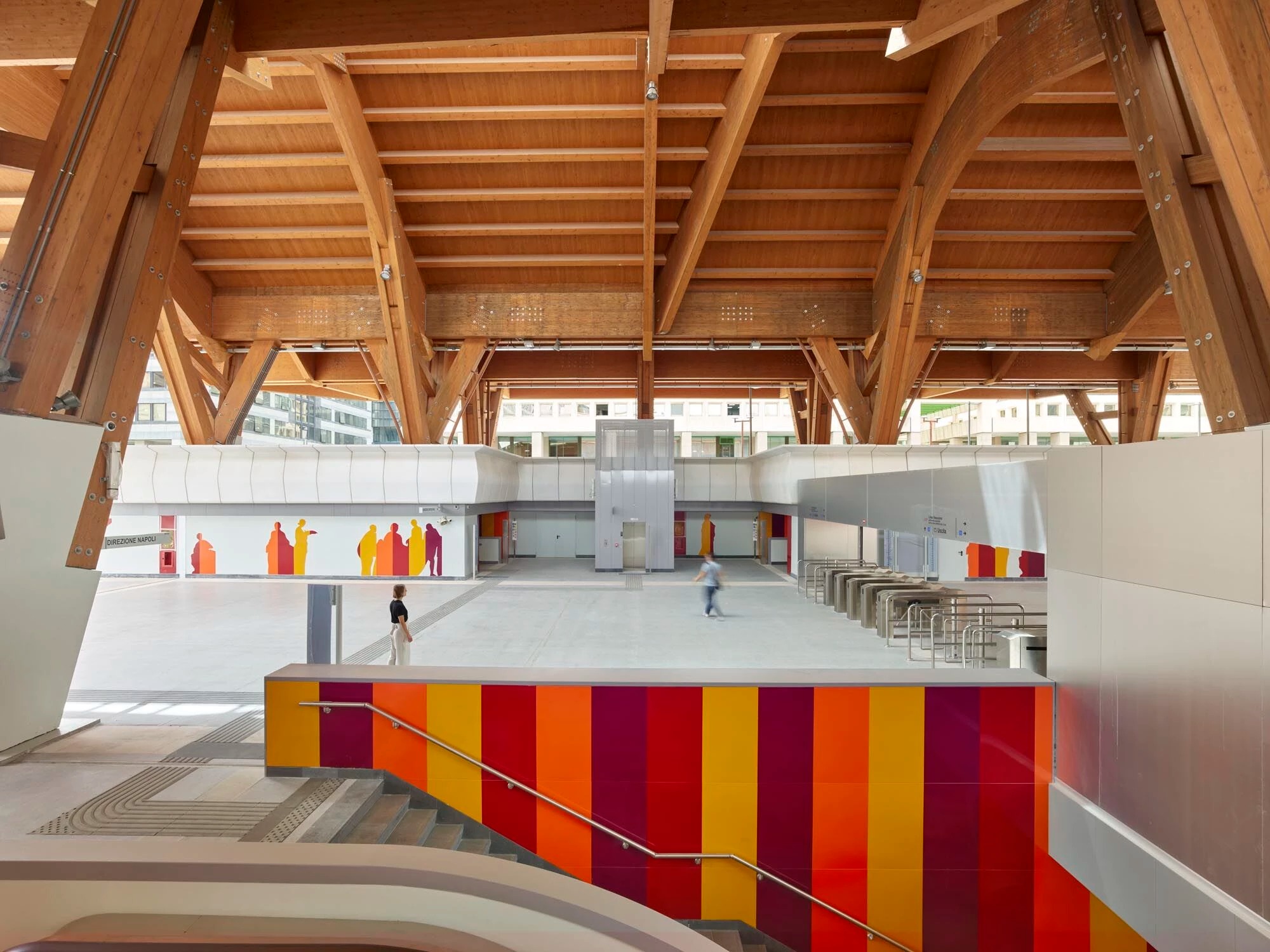
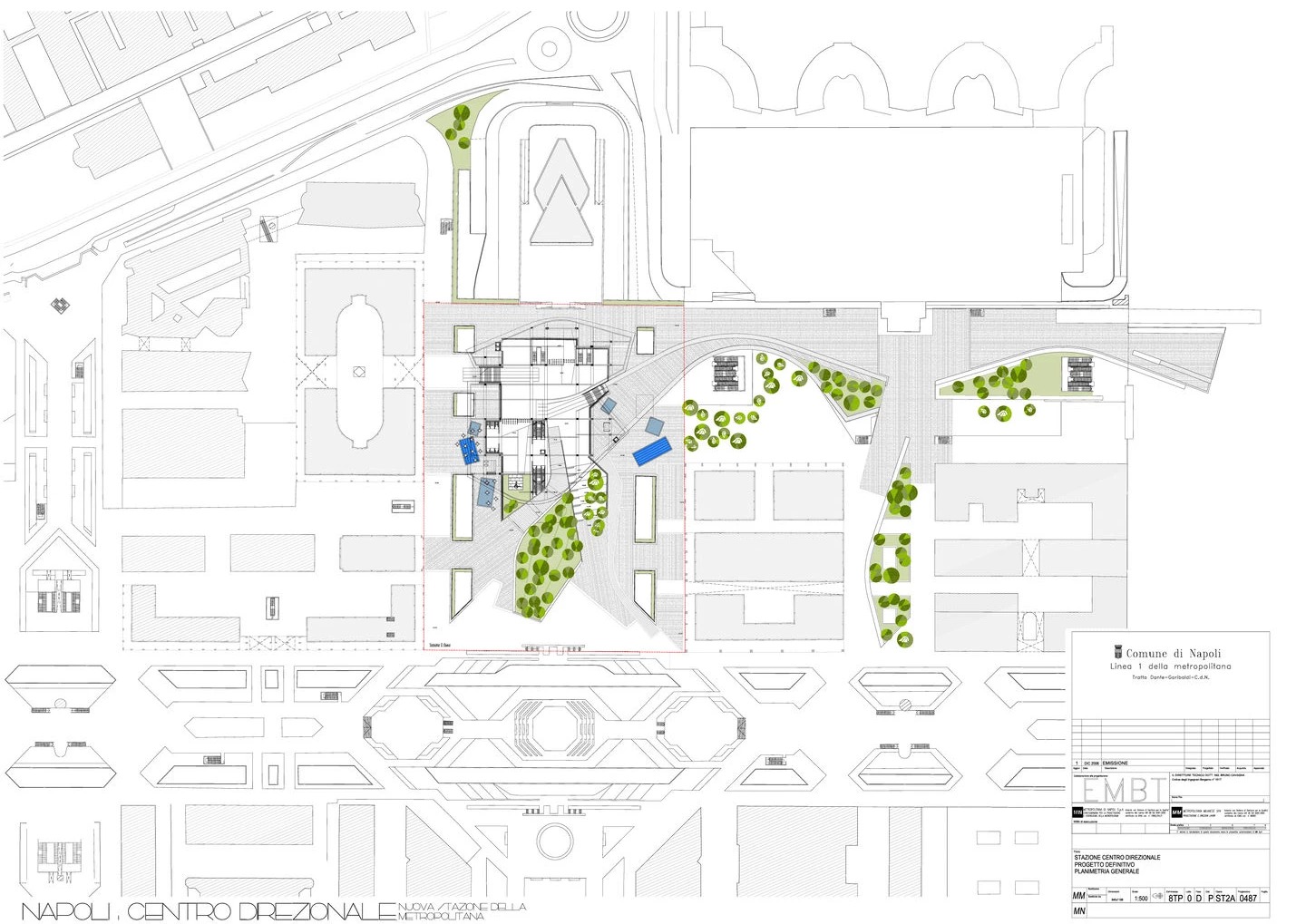
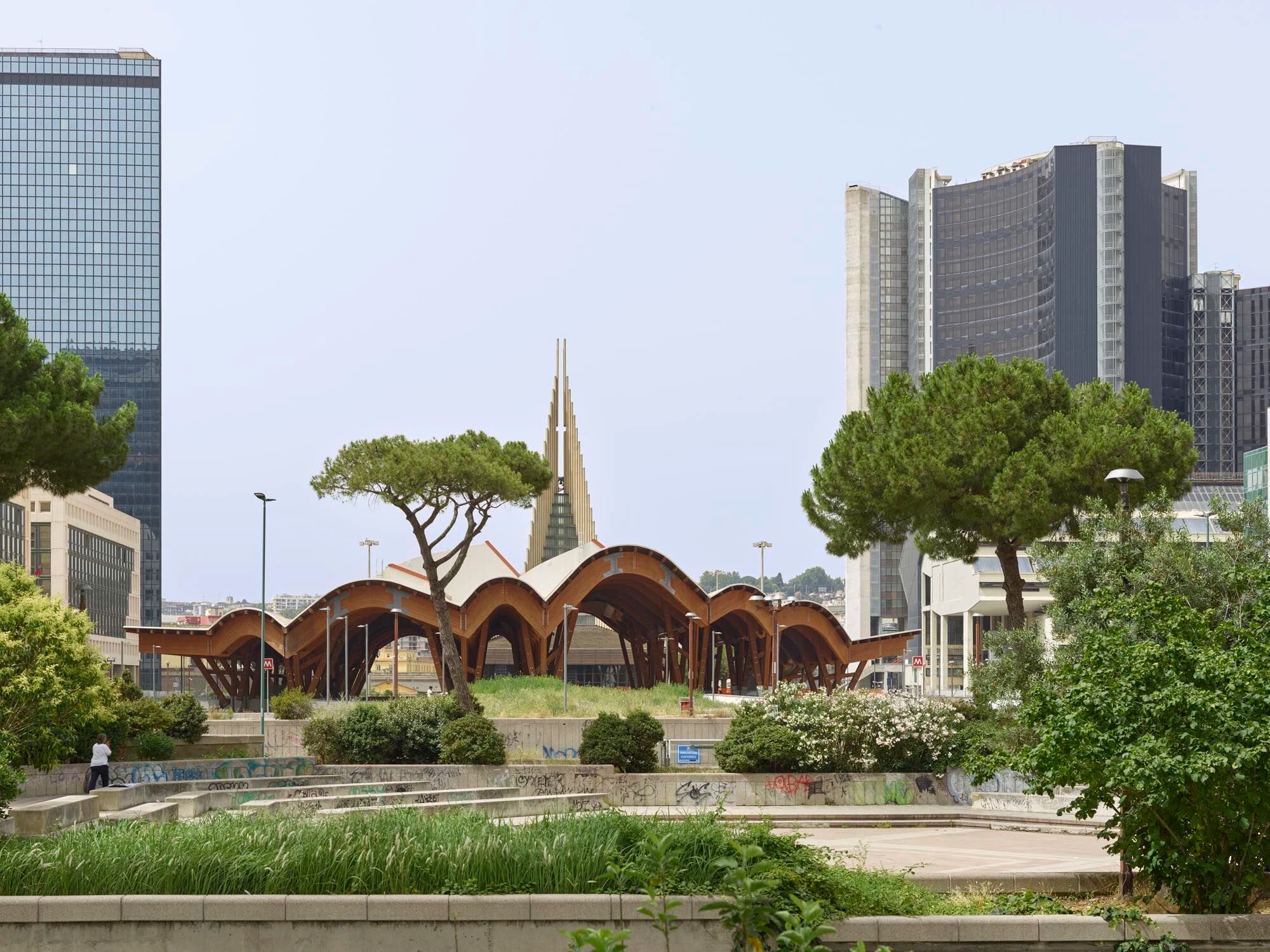
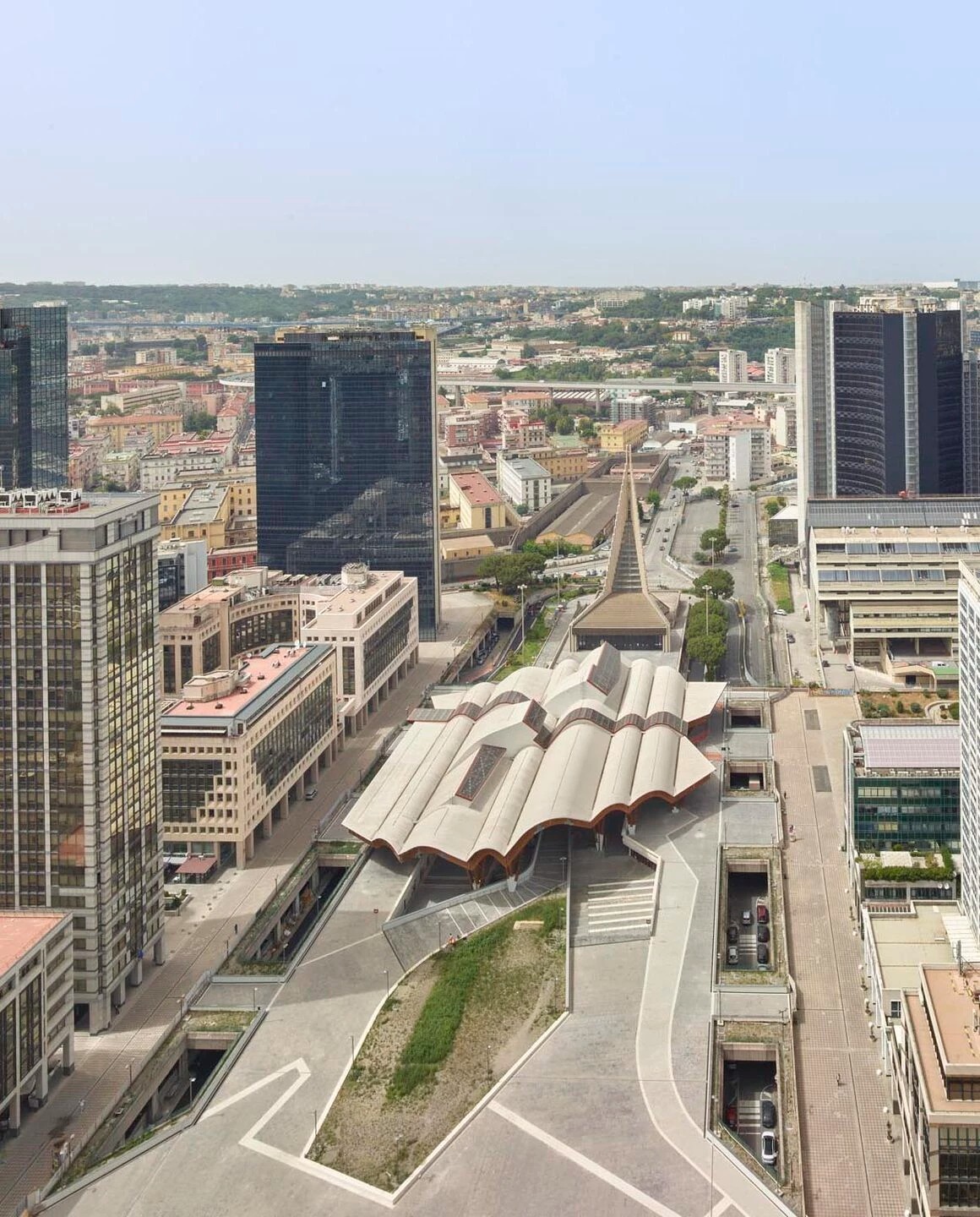
The new metro station designed by Benedetta Tagliabue with Miralles Tagliabue EMBT sits right in the middle of the district, and its most visible part is a long timber roof that rises from the ground in a series of vaults. The client was Metropolitana di Napoli, and the structural engineering was by MC2, the firm of Julio Martínez Calzón.
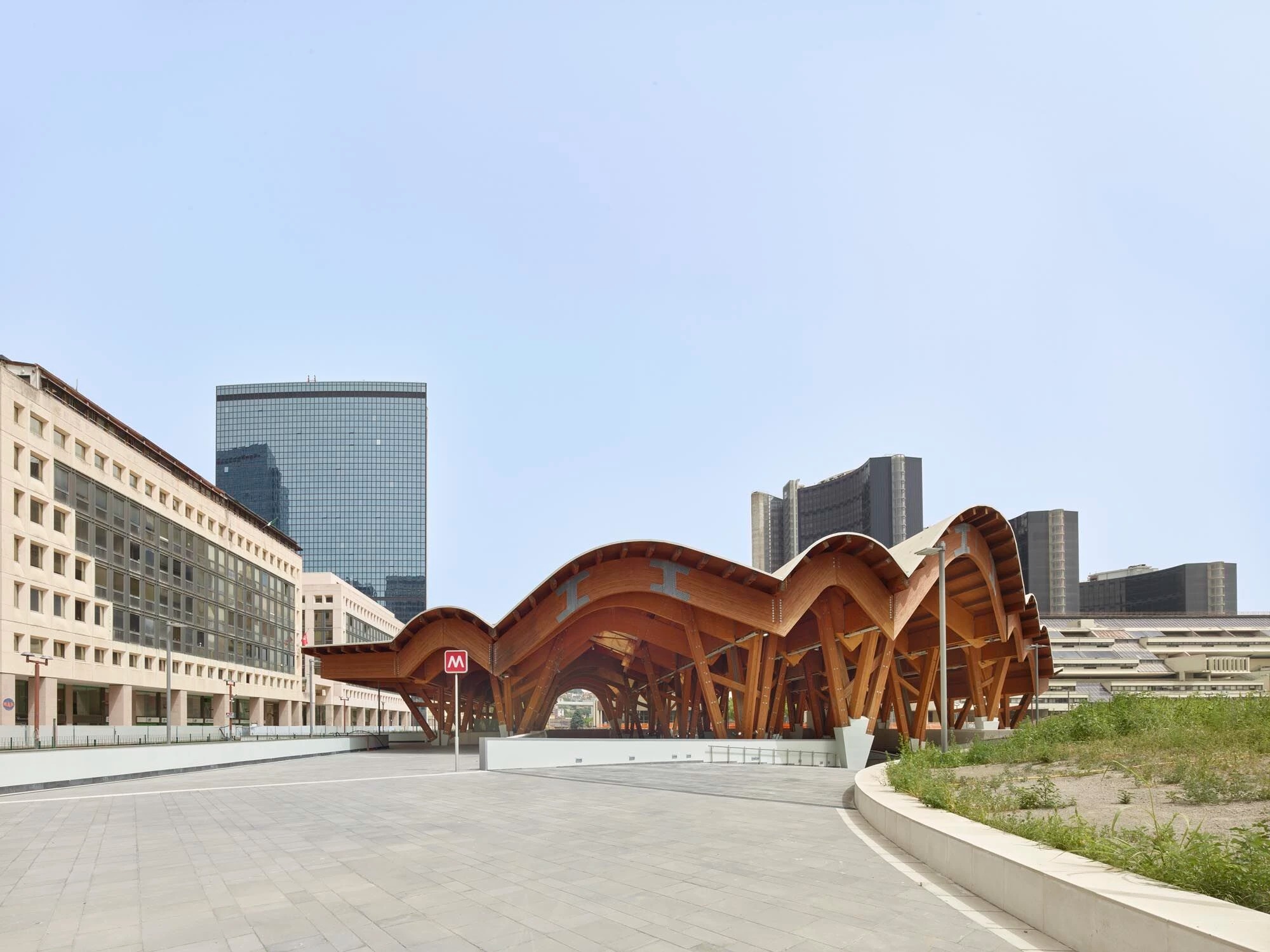
A wooden roof among the towers
Wood is the last material you would expect in a district of concrete, steel and glass, and the contrast is the point of the project. The roof is made of curved timber arches carried by timber columns that branch out at the top. The concrete columns of the old entrance were kept and now act as bases, with steel joints connecting them to the new posts. The vaults also follow the width of the tracks running below, so the shape of the roof gives a hint of where the trains are.
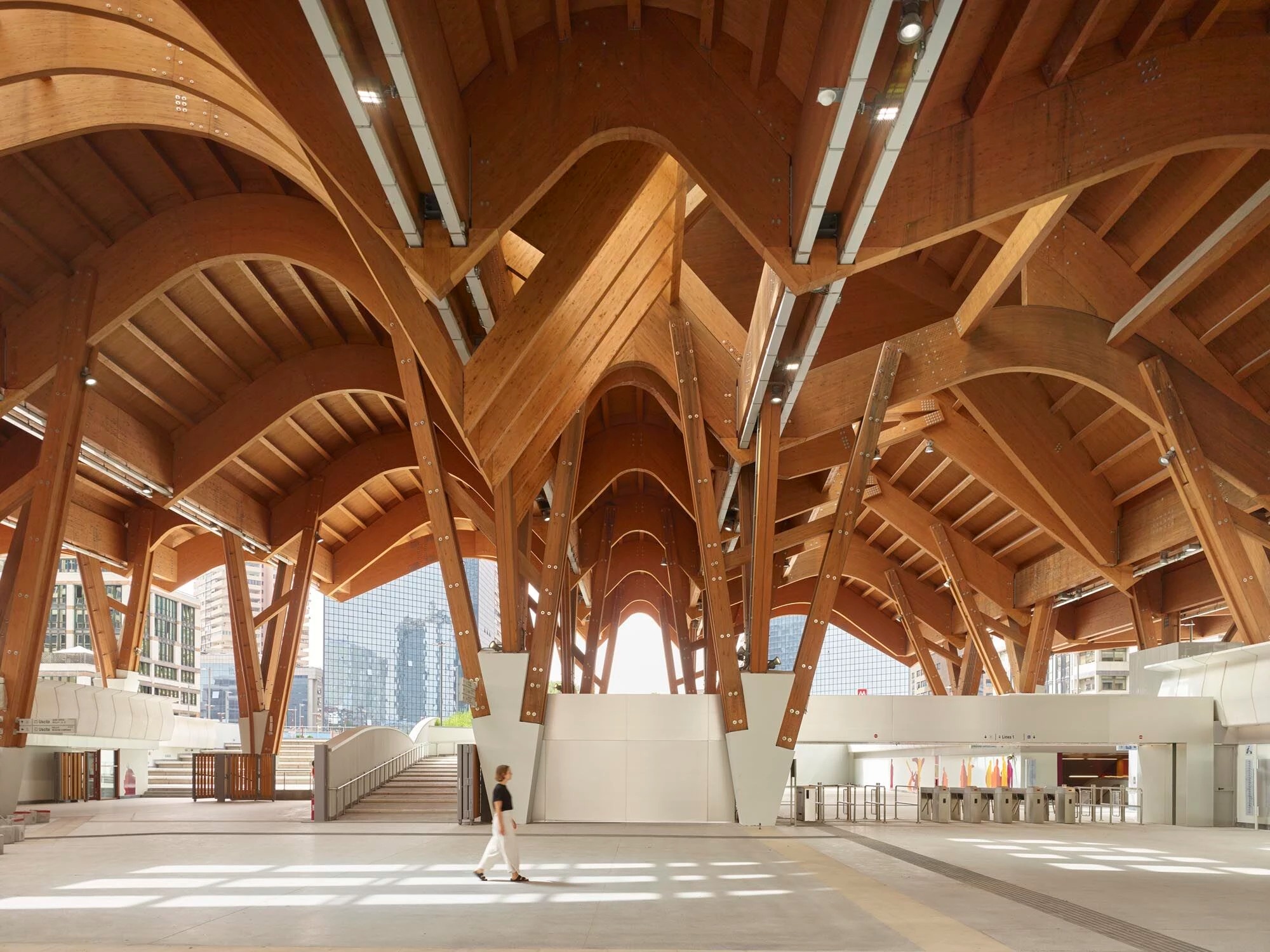
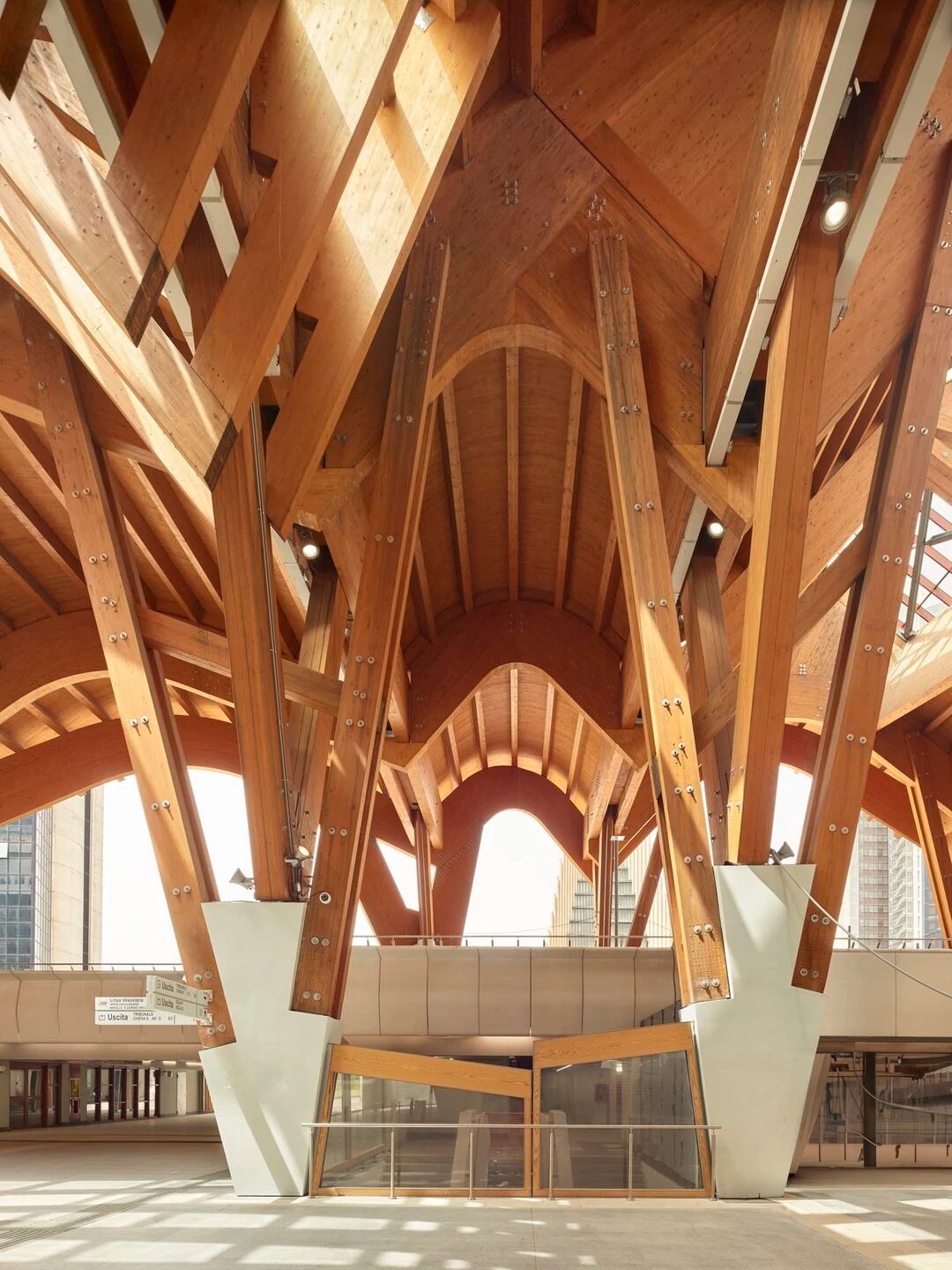
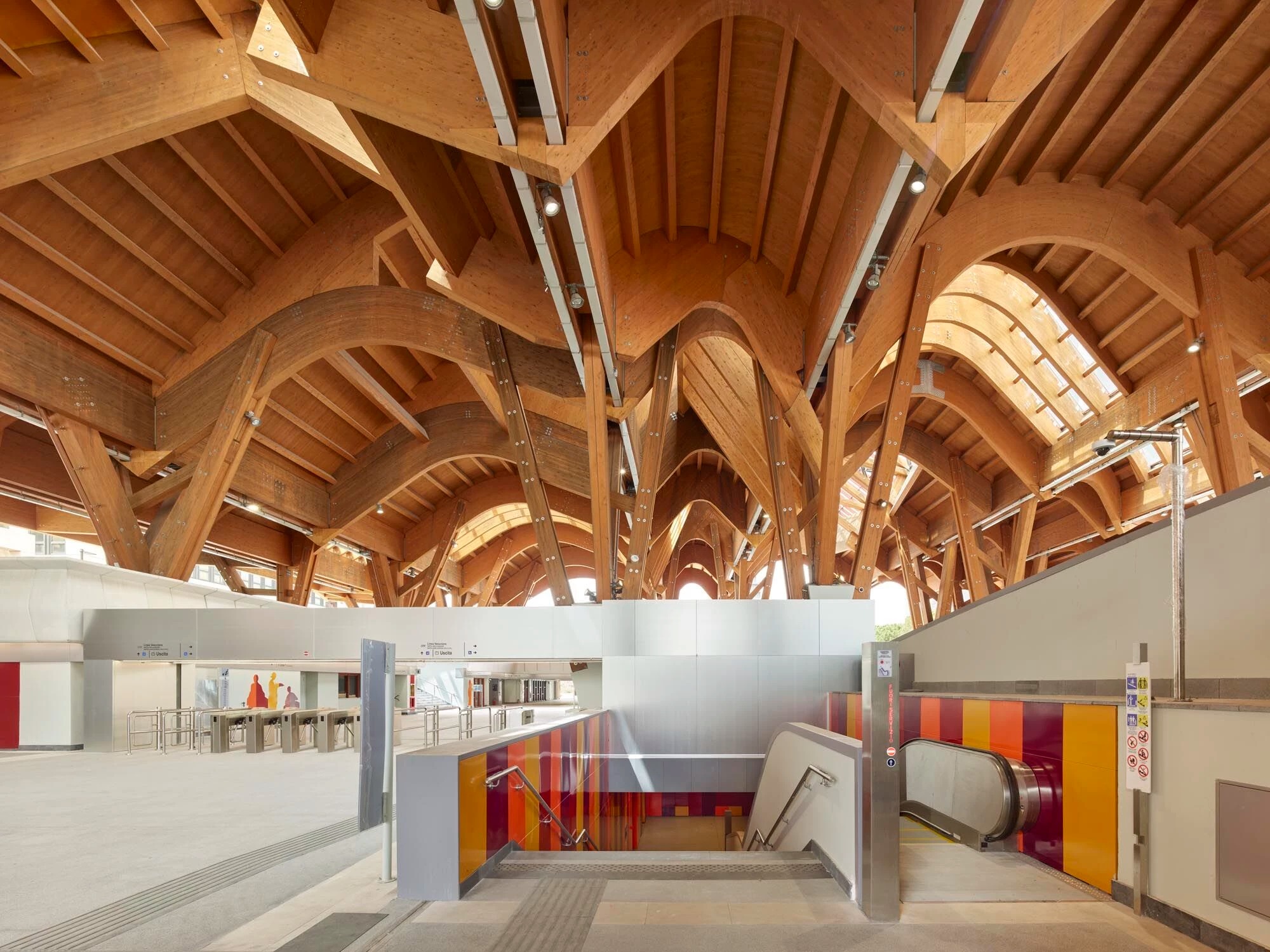
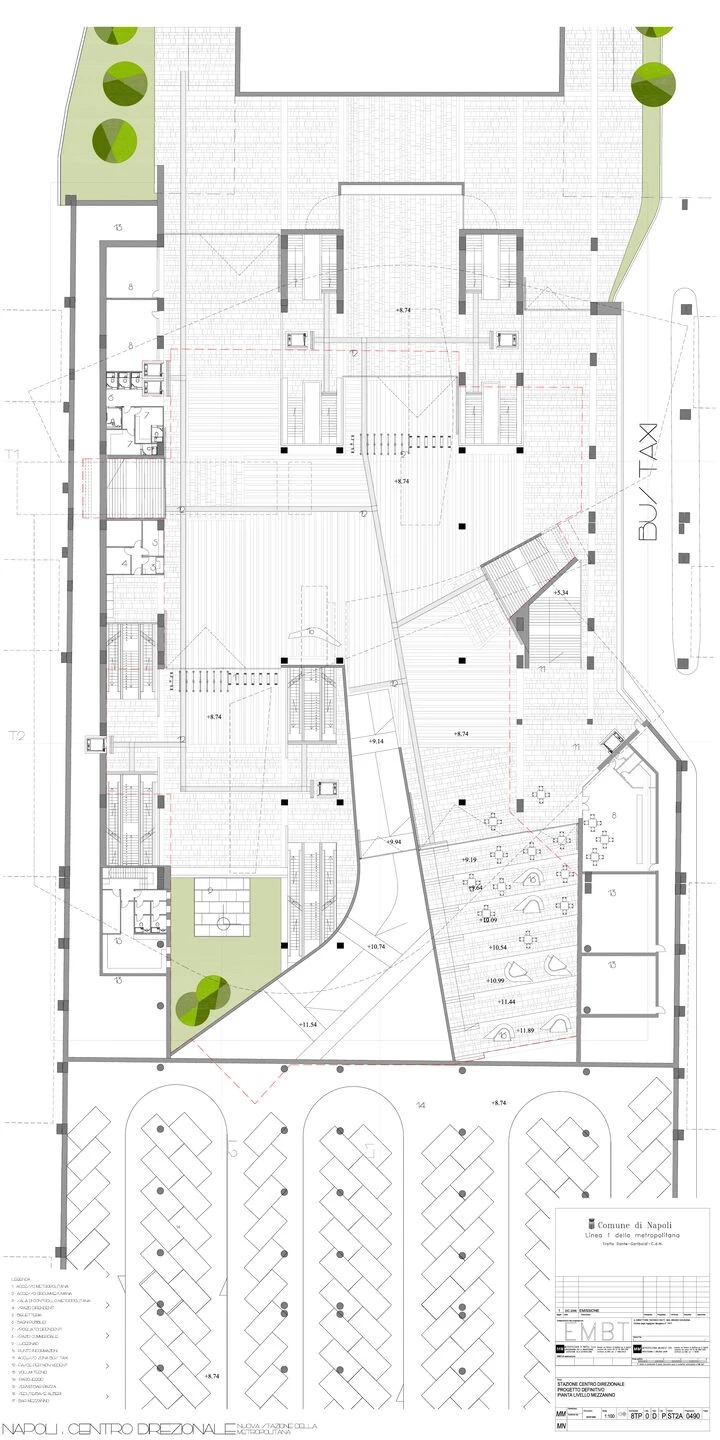
Under the roof the ground changes level too. Ramps and steps lead from the square to the entrances below.
Red and yellow underground
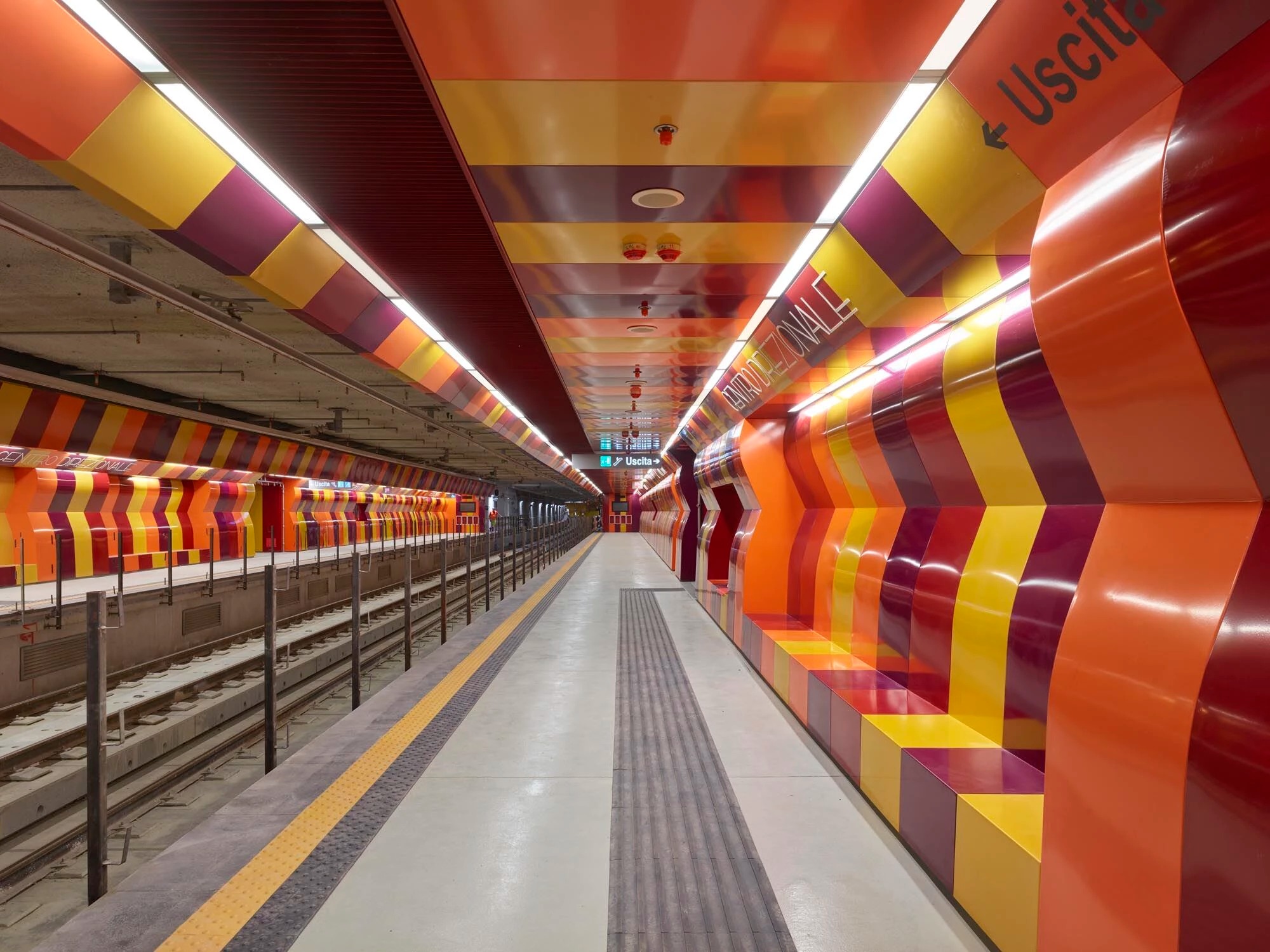
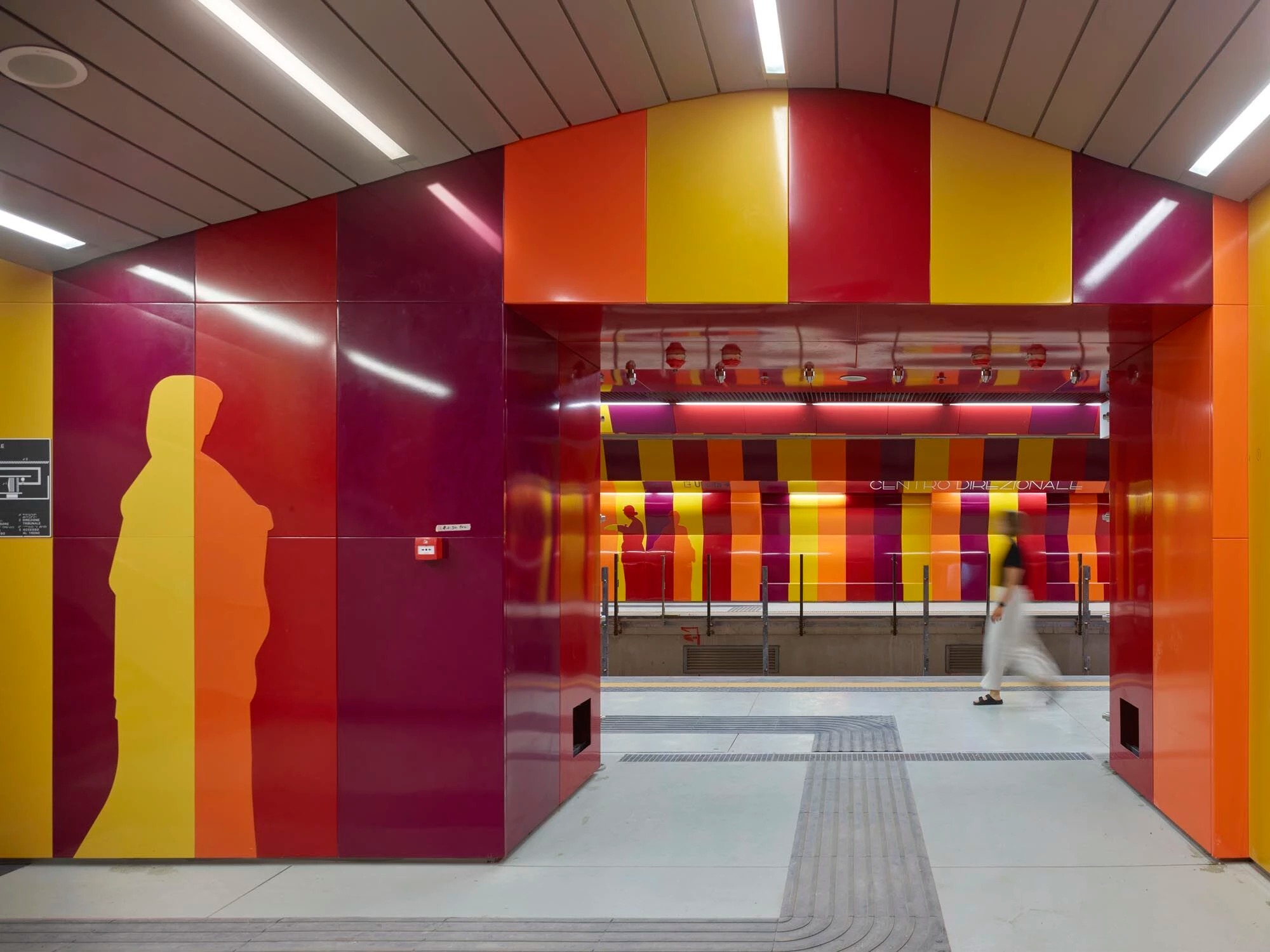
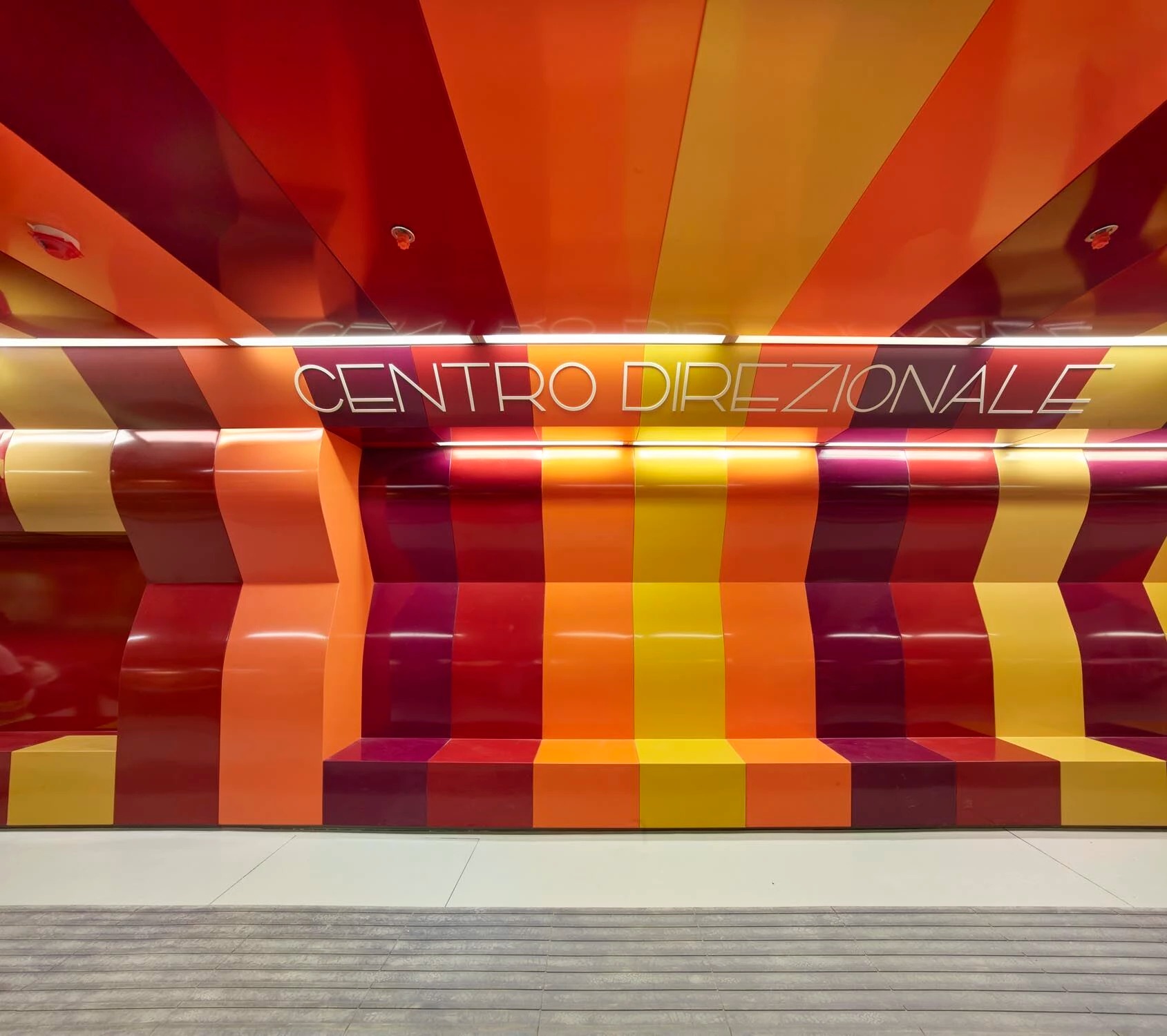
Below street level the mood changes completely. The walls and vaults of the passages and platforms are covered in bands of red, orange and yellow, colours that recall the frescoes of Pompeii, and a few human figures appear in the decoration as you get closer to the trains. It is a light way to bring the archaeology of Naples into a station that, unlike others on the network, was not built on top of ancient remains.
The Naples metro is known for its art stations, where architects and artists have designed the stops one by one. Most of them are remembered for what happens underground. Centro Direzionale puts much of its effort into the surface instead, giving an office district a covered square that people can use even when they are not catching a train. If the area around it follows, the station could do more for the district than another tower.
Keep reading: Soviet metro stations photographed by Christopher Herwig and the timber air terminal for Rouyn-Noranda airport.